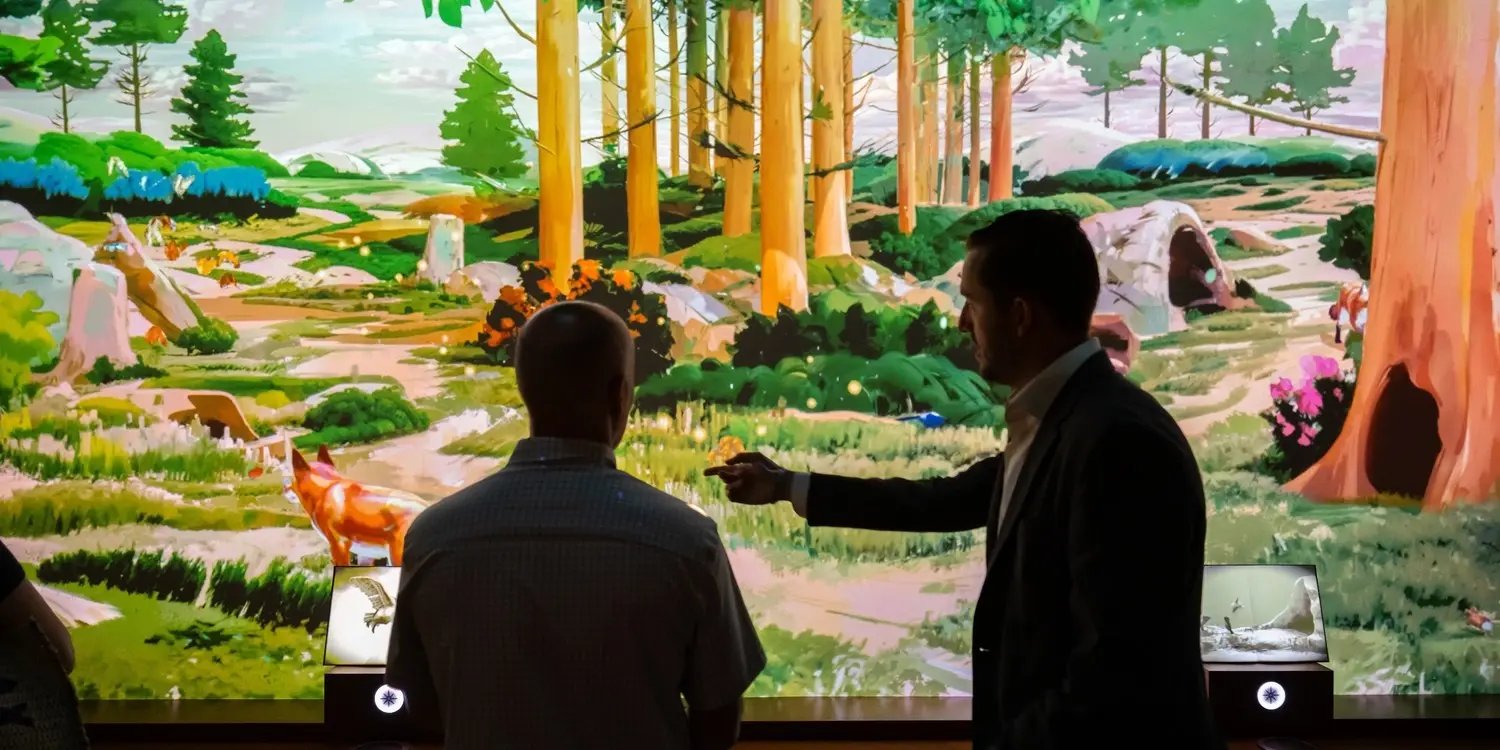
Two people pointing and interacting with the forest media on the wall.

MUSEUM AND CULTURAL SITES

Theodore Roosevelt Presidential Library

Medora, North Dakota

Read more about the project


ROOTS OF A LEGACY 

An immersive journey through Roosevelt's childhood

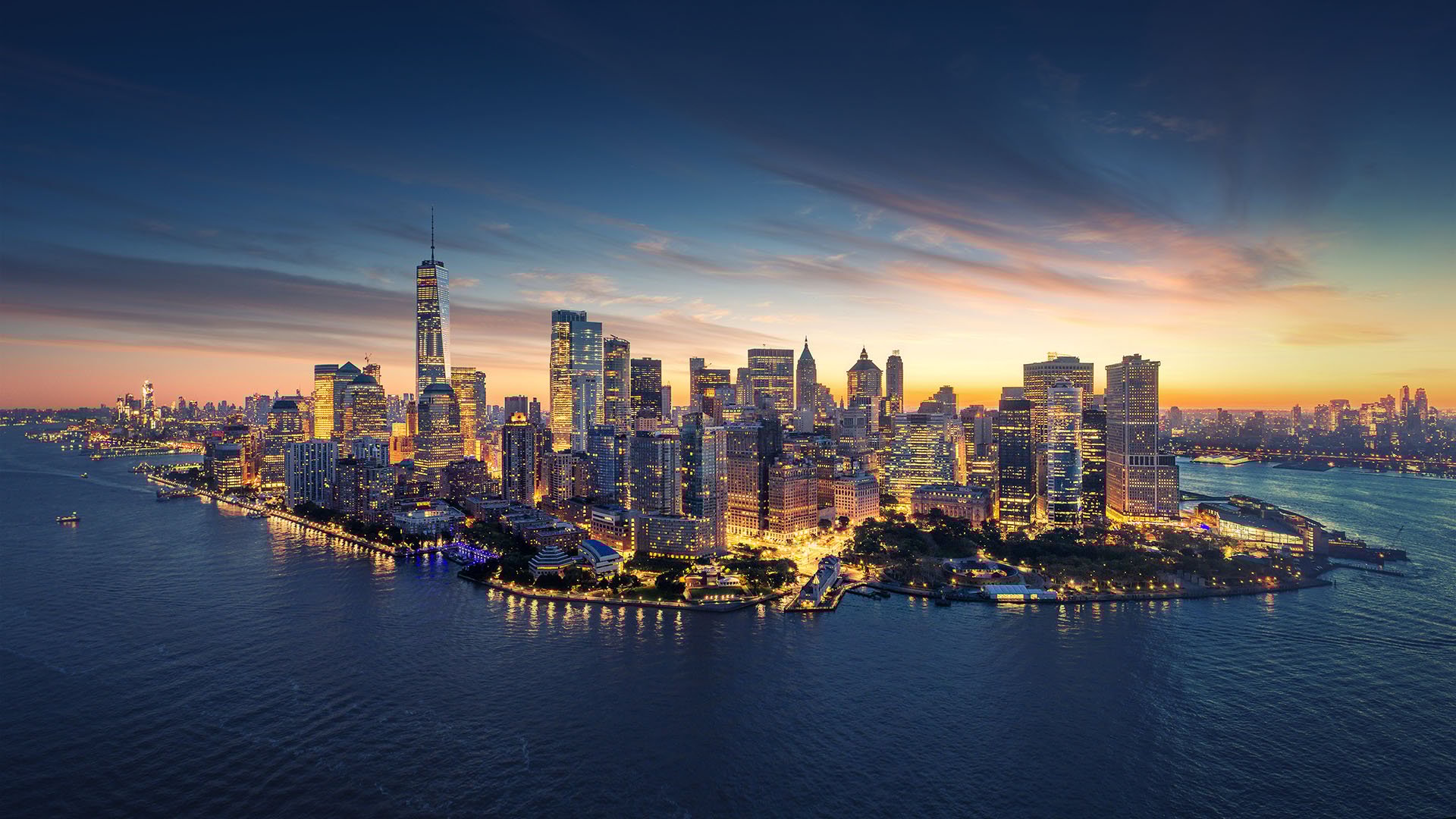
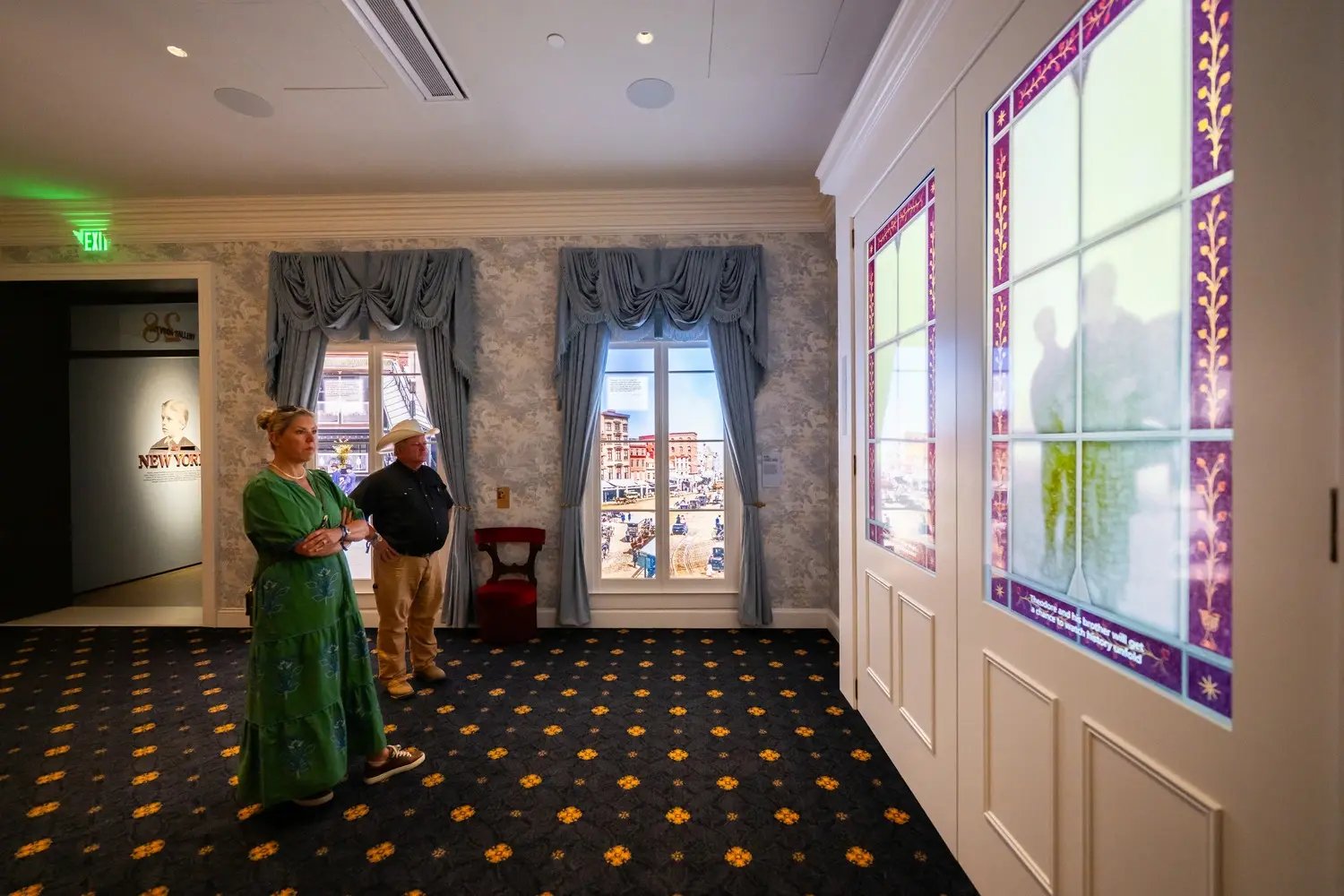
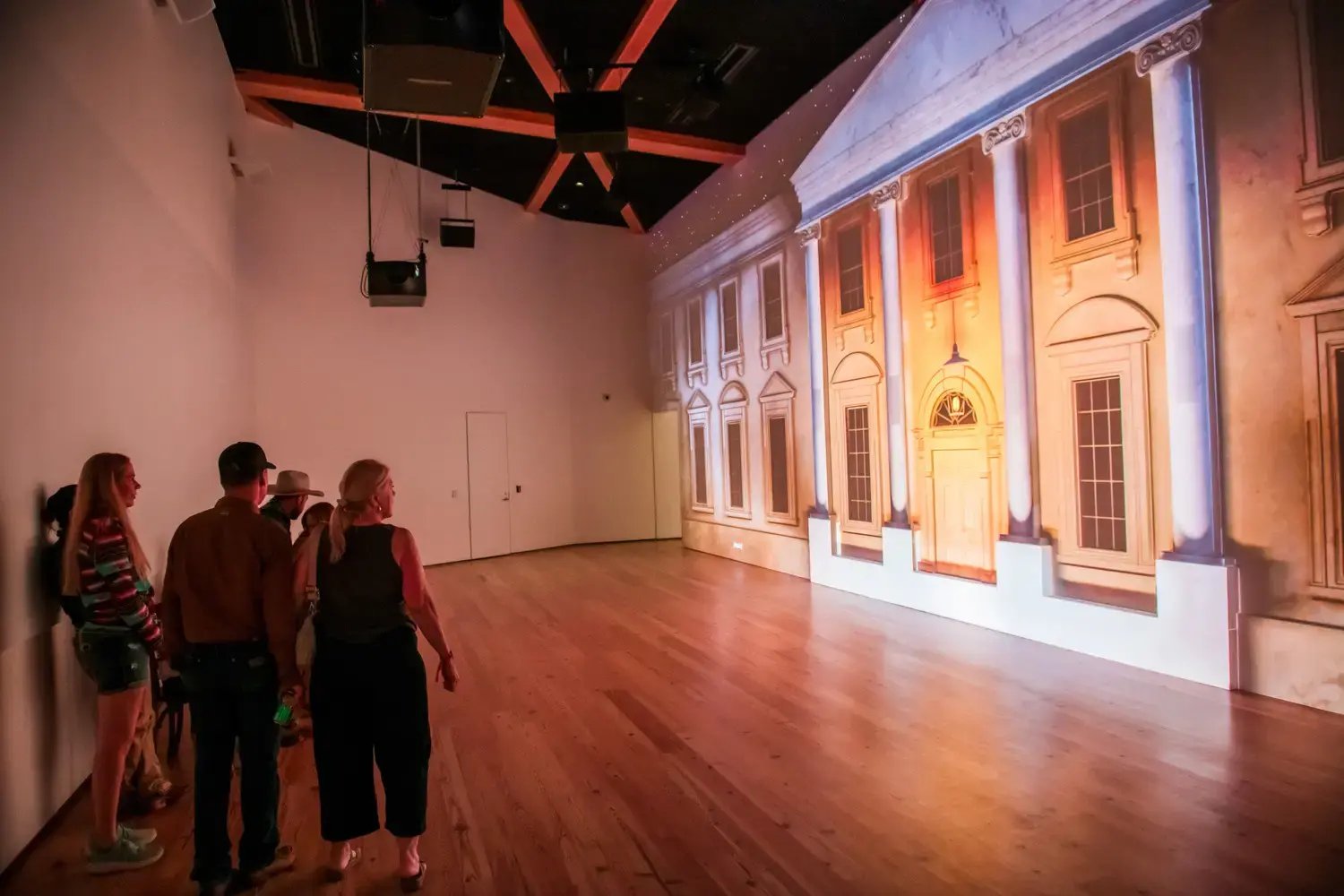
Roosevelt was born on October 27, 1858, in a brownstone townhouse at 28 East 20th Street in Manhattan. The museum displays this home and its parlor supported by the integration of 5 LCD displays that recreates the facade as well as welcome guests into his early life. Additionally, there are two displays that show stained glass, informing visitors of Roosevelt’s wealthy origin. As guests move through the space, music comes to life with nexmosphere sensor technology upon approaching Roosevelt’s piano. 

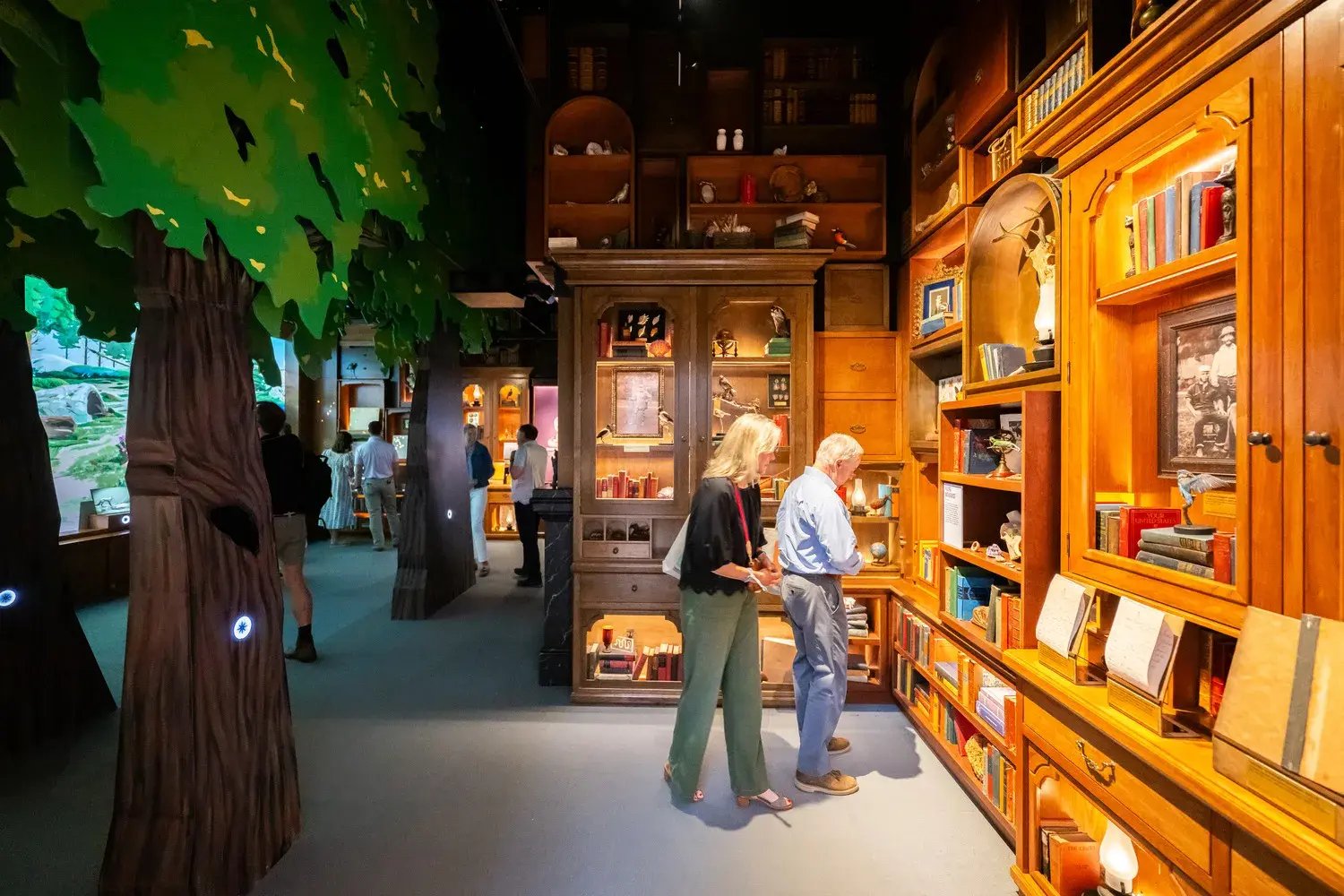
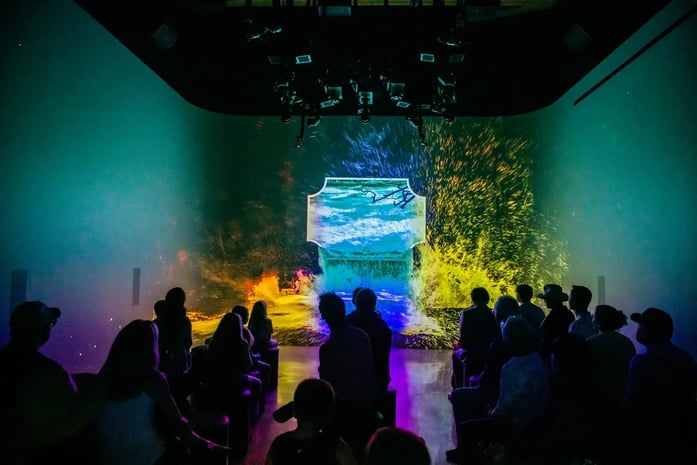
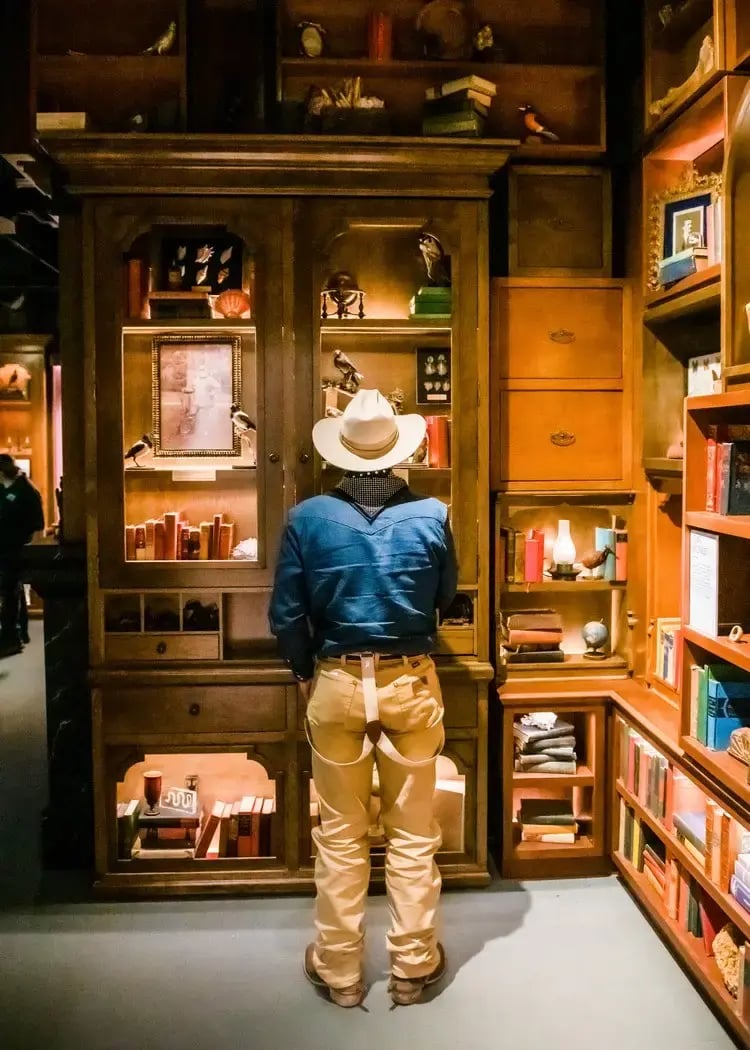
Roosevelt’s early years were shadowed by severe asthma. As a result, he showed a natural curiosity to the outside world and became a serious naturalist. By his early teens he had established what he grandly termed the “Roosevelt Museum of Natural History” in his bedroom and throughout the family’s house: preserved birds and small mammals, insect specimens, skeletal materials, careful notational records. The museum recreates this space through reimagining the boyhood specimen collection and integrating Pixera’s Unity software game for visitors to play showing the Circle of Life in the projection with scalable calibration. 

Man watching LED window displays.
Two people watching window with LED display.
Woman pointing at projection on wall
Two people interacting with the artifacts on the wall.

NEXT STOP: REINVENTION

Following Roosevelt's Path Through Technology.

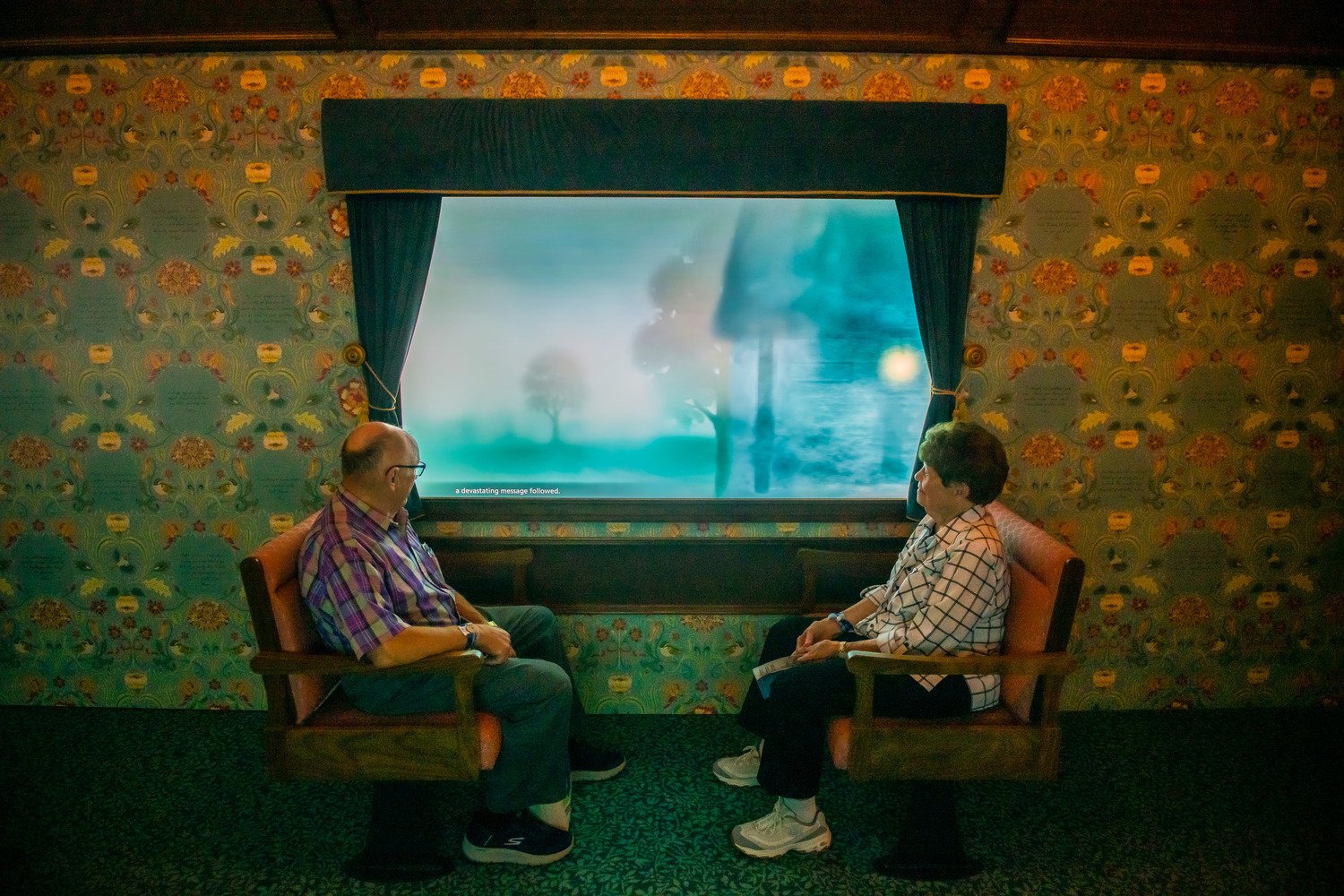
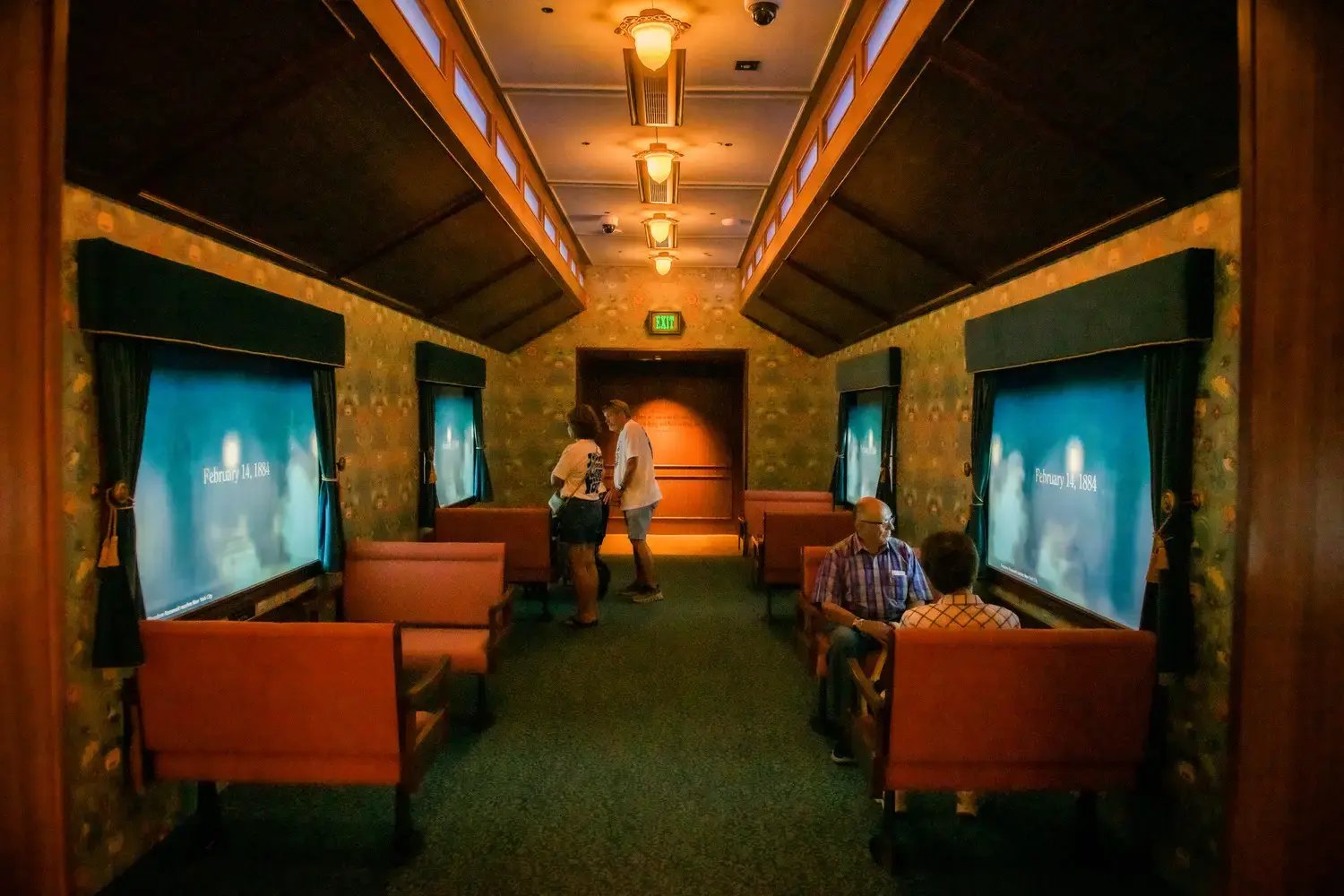
After the death of his wife and mother, Roosevelt traveled west to recover from his grief. The museum incorporated a Memory Train that displays scenic windows of a moving train through 4 LCD displays and highlighted his journey westward. The buttkicker technology simulates a moving train so that the viewer feels the train leave and enter the station. Each window is accompanied by a soundbar and overhead speakers. 

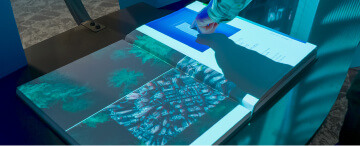
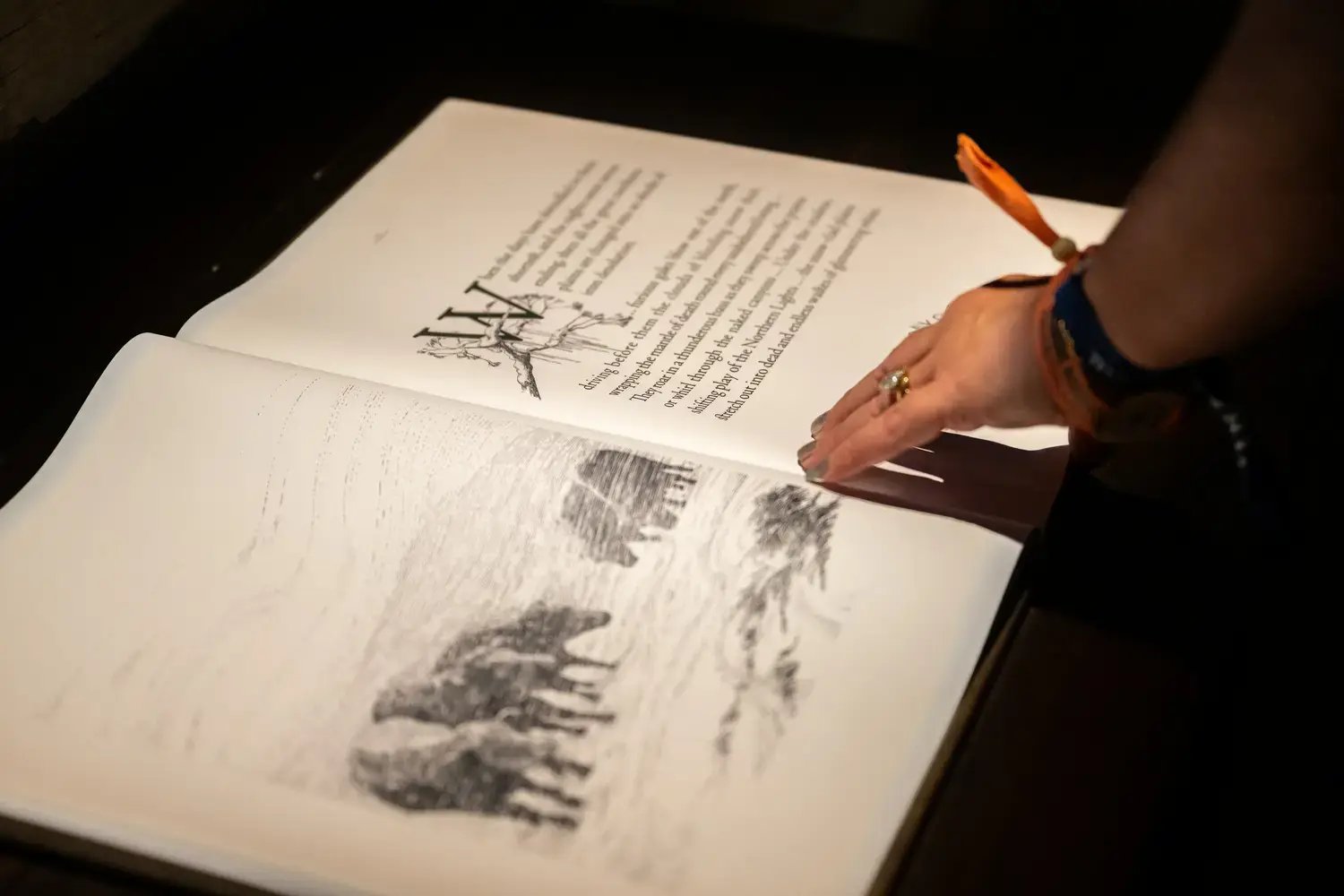
While west, Roosevelt had fallen into the role of a rancher and reinvented himself in the Dakota Territory. Roosevelt and his friends, Bill Sewall and Wilmot Dow, built a ranch, the Elkhorn, on a remote bend of the Little Missouri north of Medora. This is displayed in the museum through the Elkhorn Ranch exhibit that uses three 86-inch displays that act as windows in a scenic cabin. Two interactive books invite visitors to explore key moments from Theodore Roosevelt's life.

As guests turn the pages, overhead optical cameras track their interactions using infrared markers embedded within the books, seamlessly triggering multimedia stories that bring Roosevelt's experiences to life.

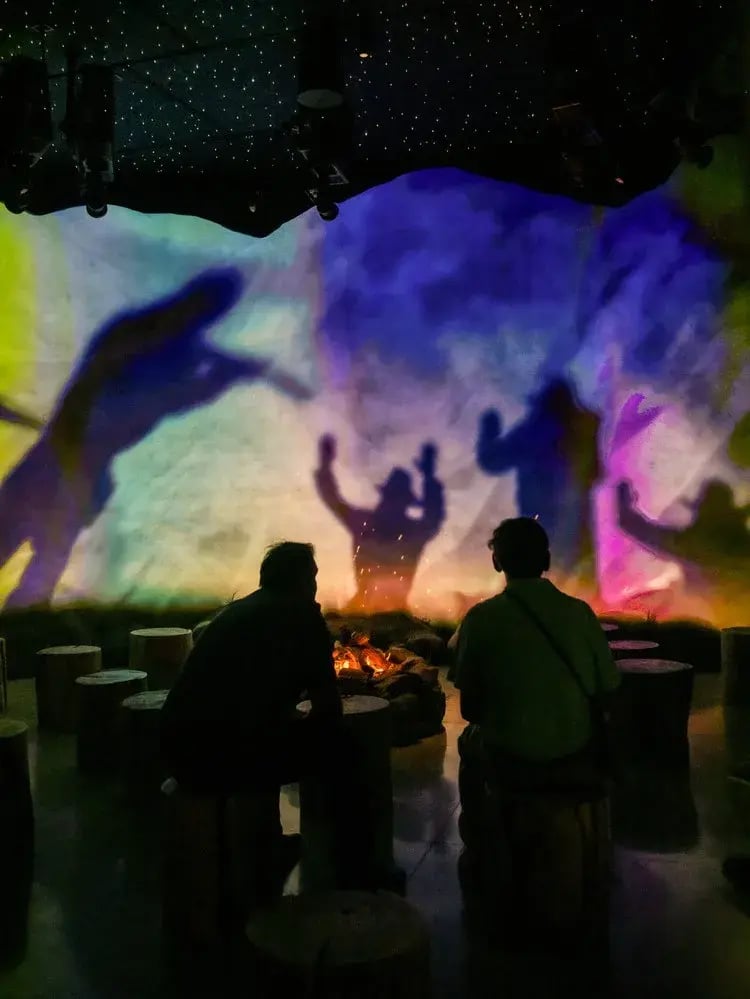
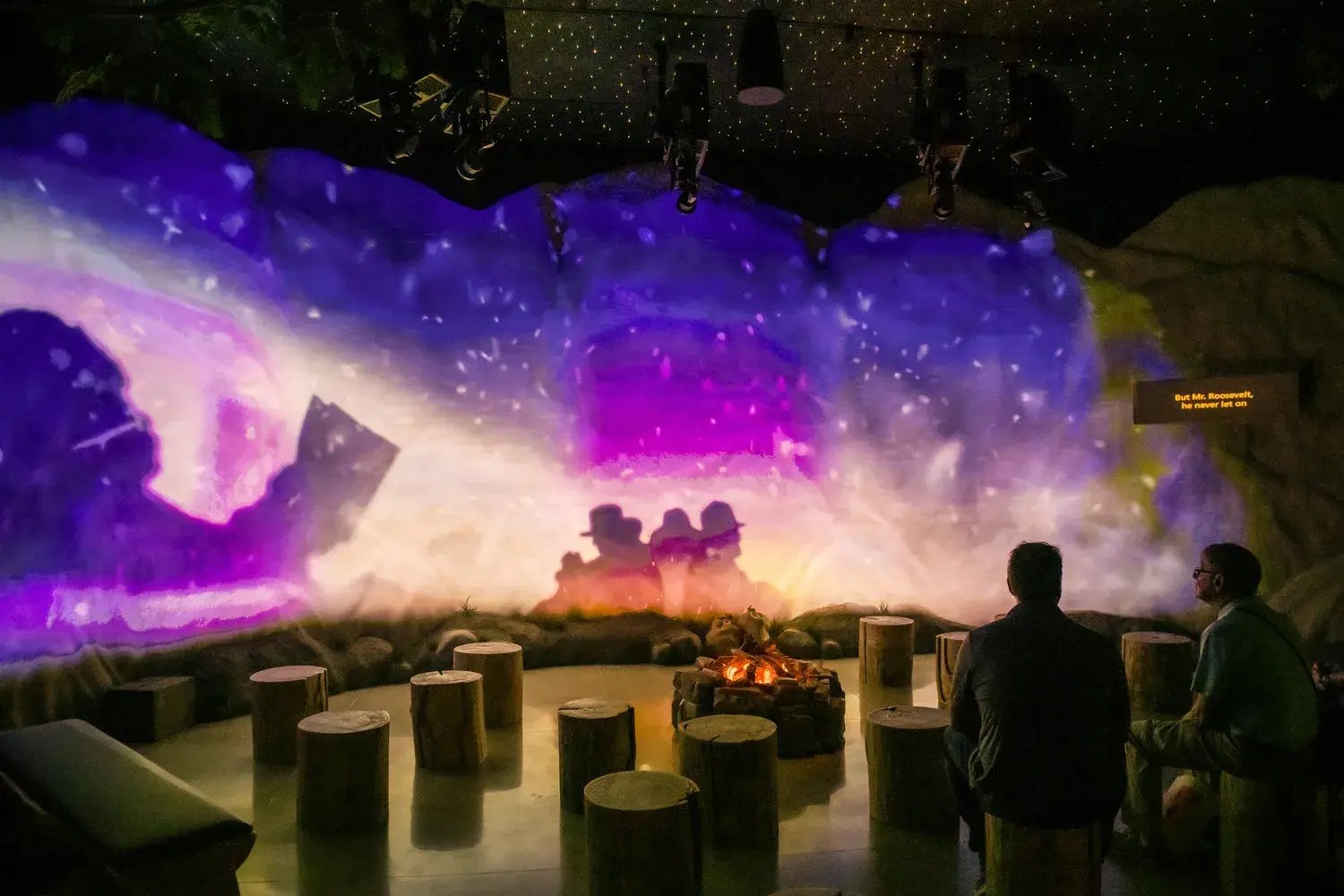
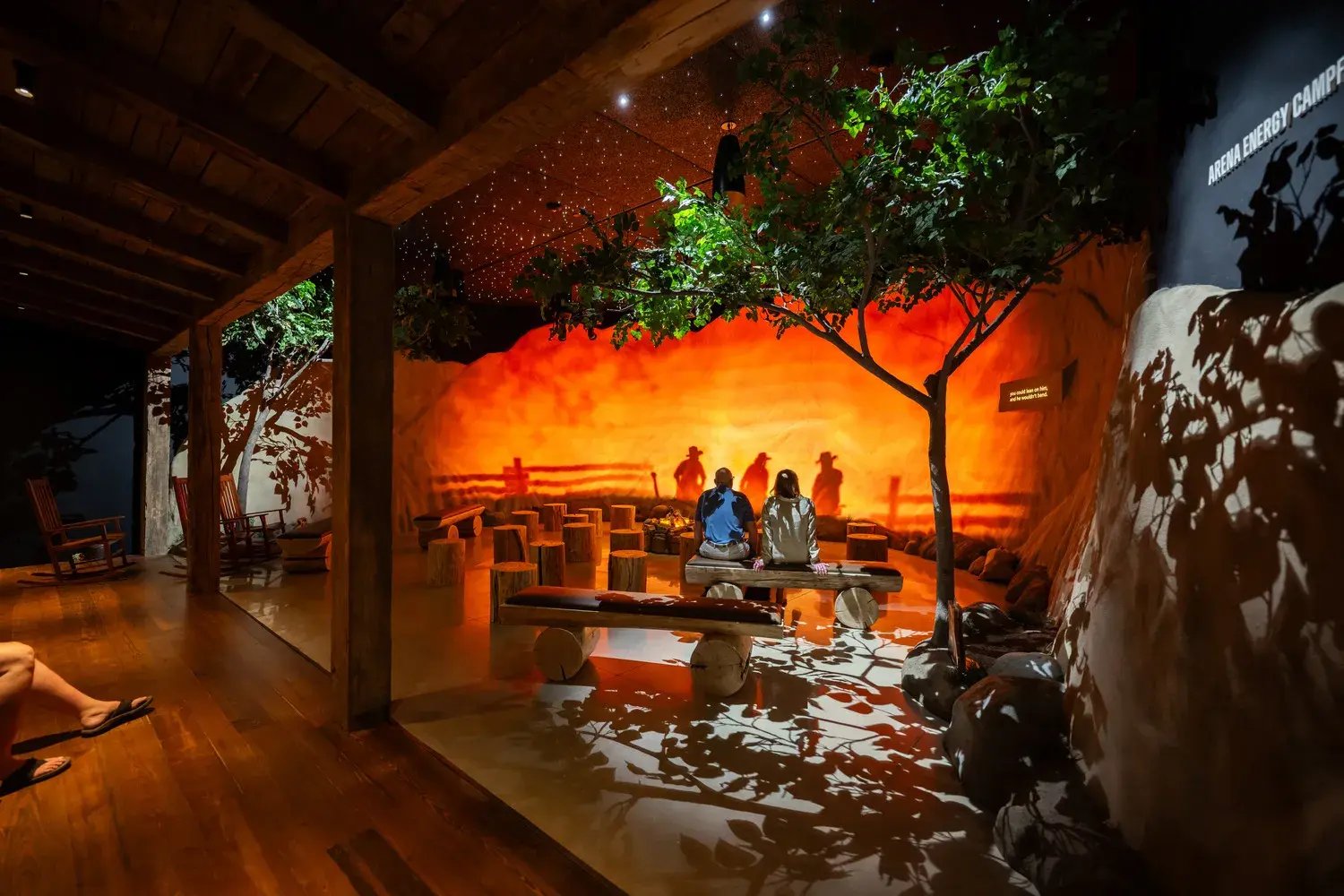
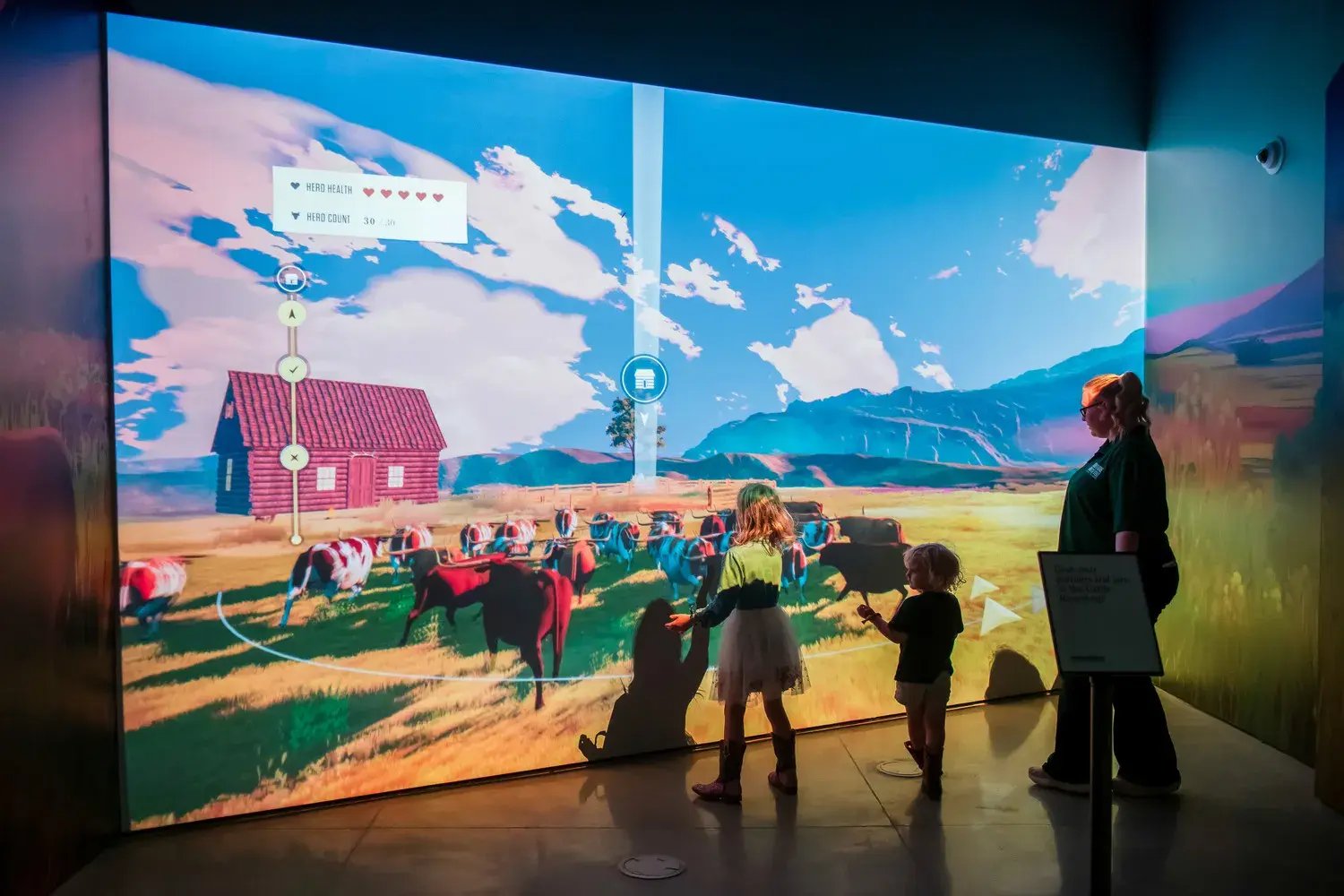
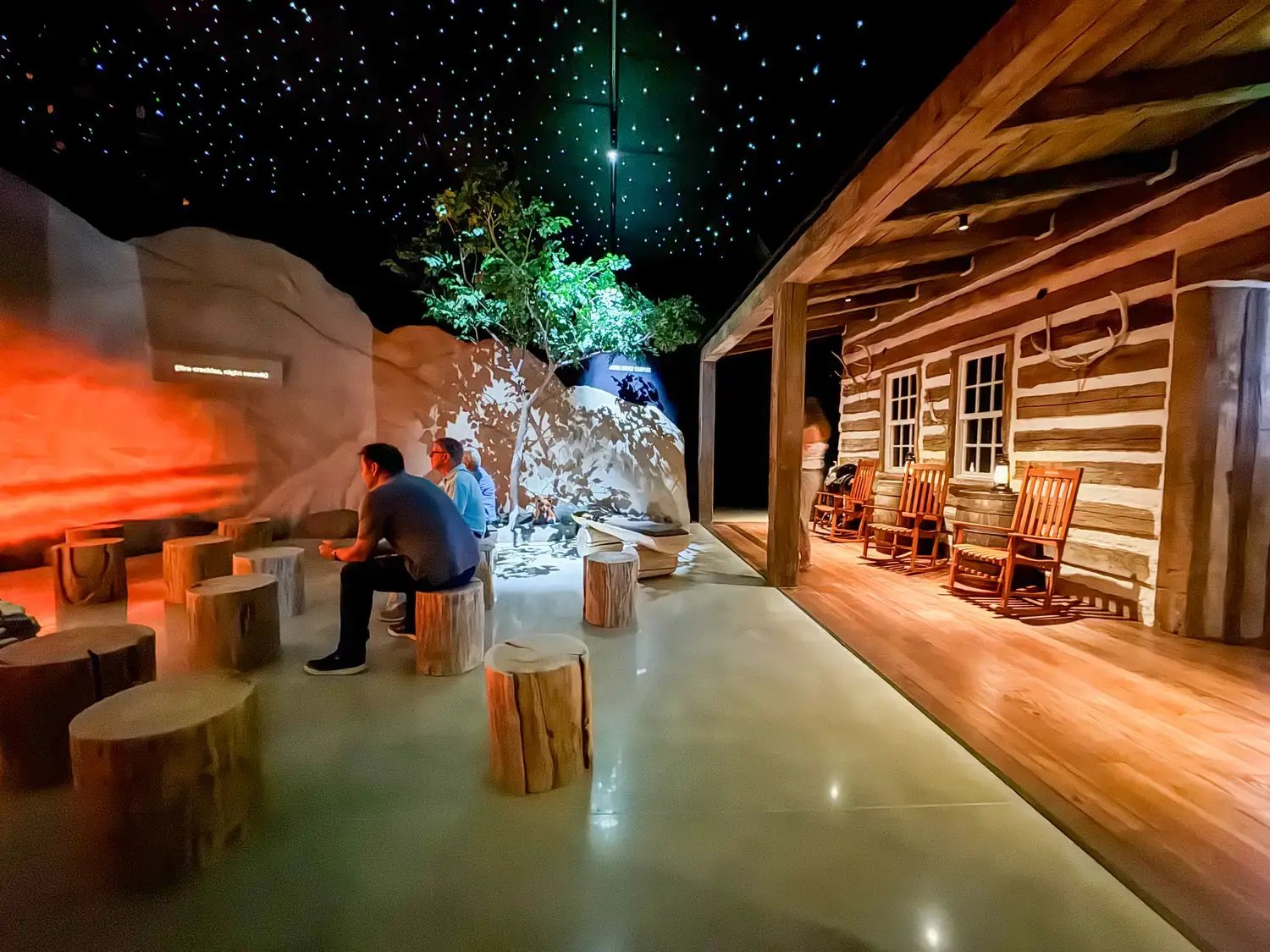
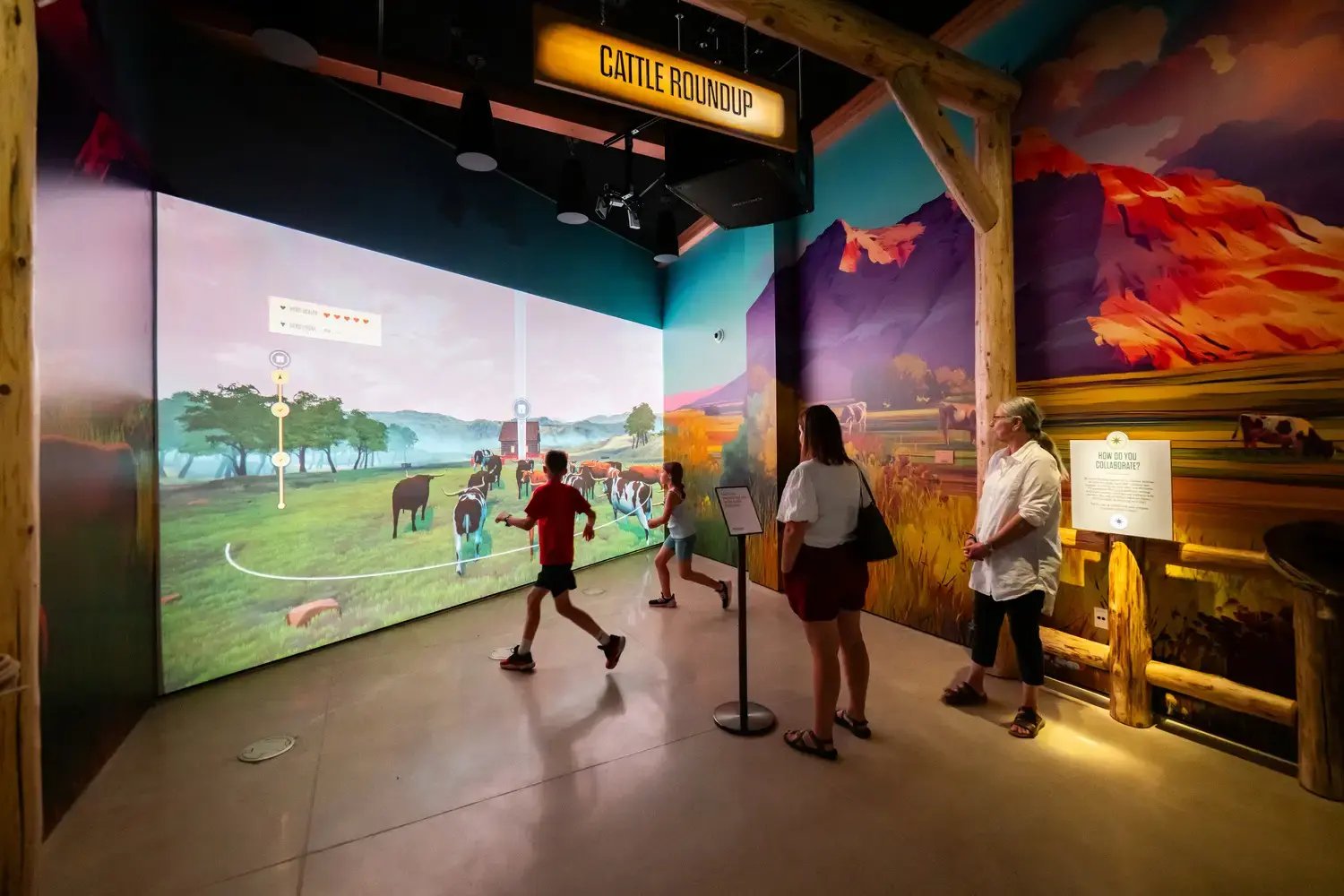
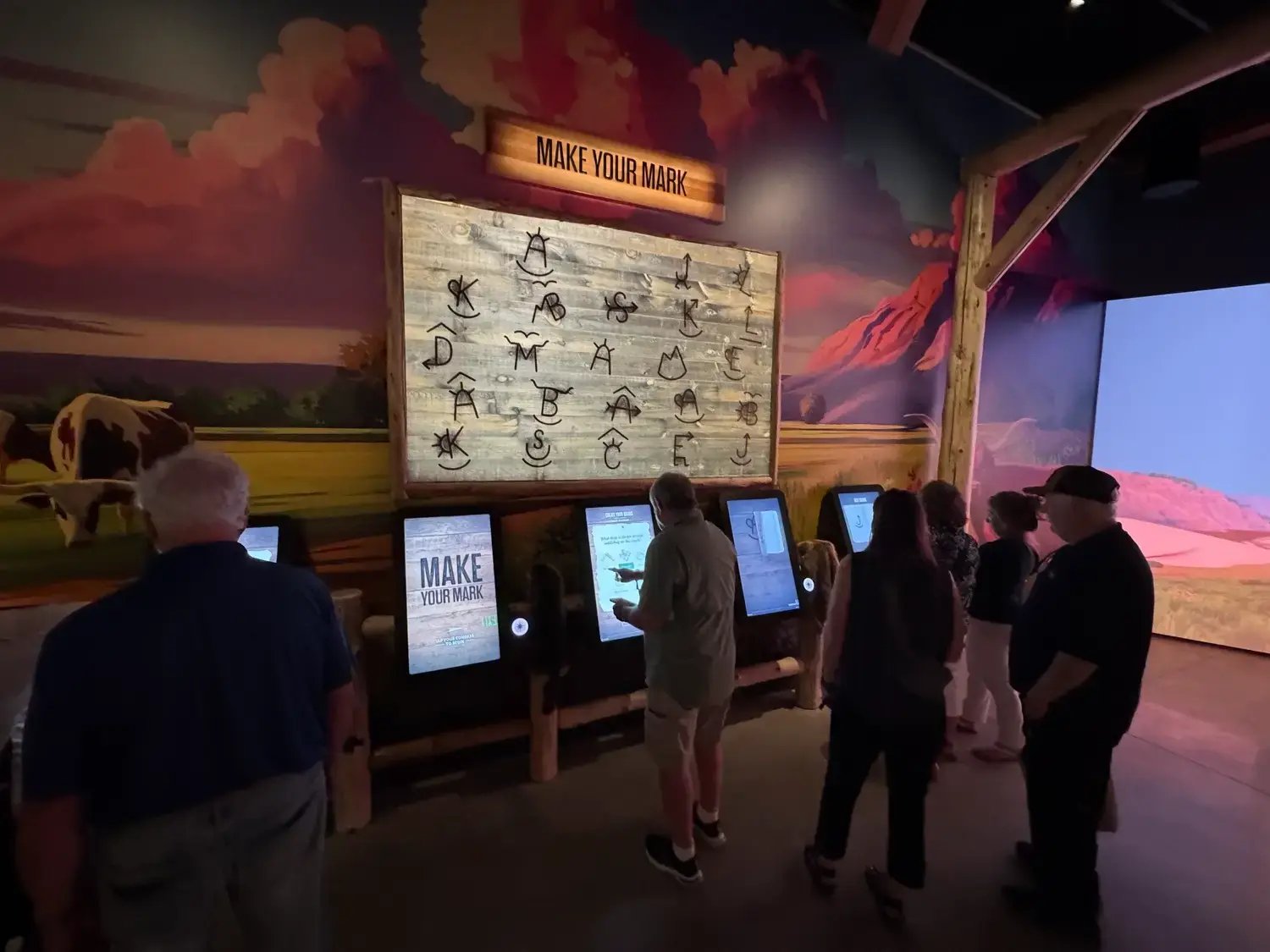
Further displaying his time as a ranch hand in North Dakota is an outdoor campfire scene and AV activities. This scene includes 6 portrait Christie projectors into a Pixera picture warped and Scalable Displayed Technologies projection mapped scenic rock wall with a Technifex firepit simulation in the middle of the logs while the media tells the stories of Roosevelt’s life. There are also multiple interactive projected activities where visitors can become ranch hands. The games include shooting tin cans and rounding up to steal cattle from others in the room and making their own brand with the completed results projected onto the surface. 

Two old people sitting down while looking out of window.
Two men looking at projection on wall.
Outside view of two people looking at the projection on the wall.
Children playing with the projection games on the wall.
HANDS ON HISTORY

Experience the race to the White House.

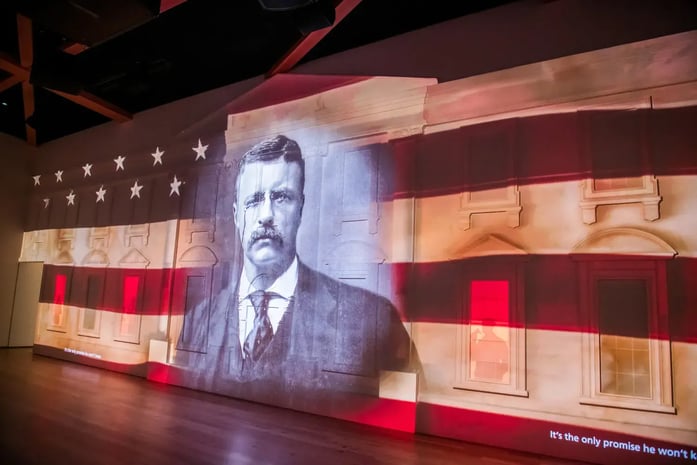
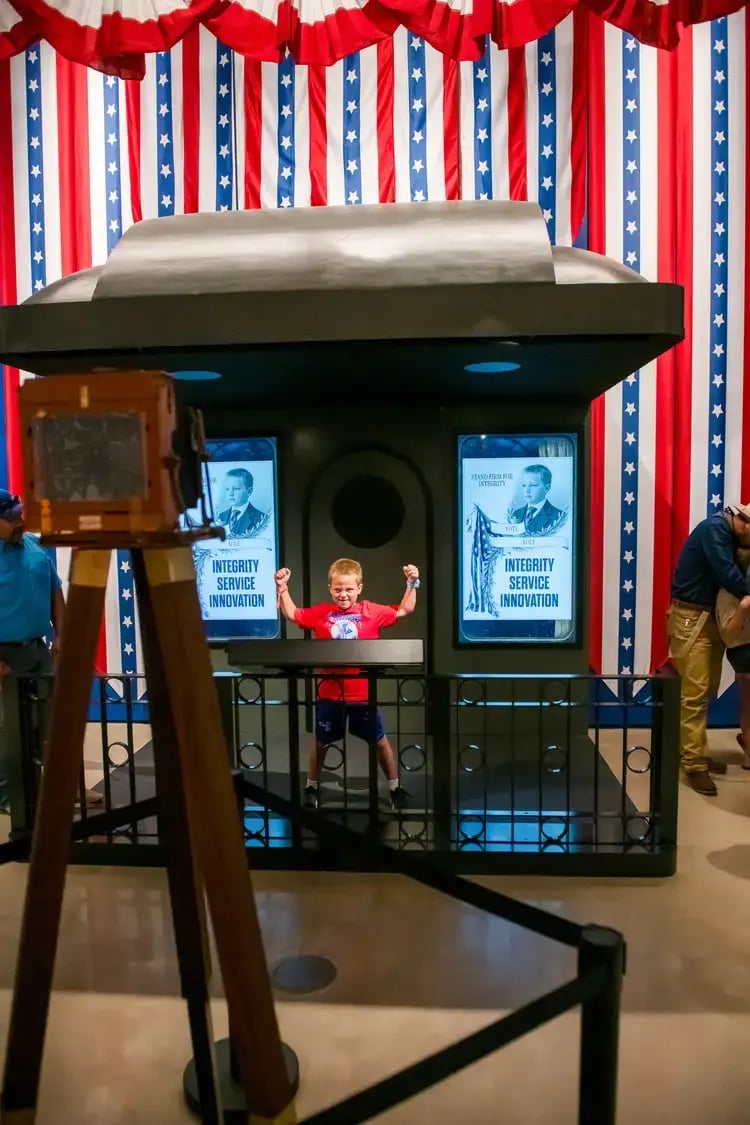
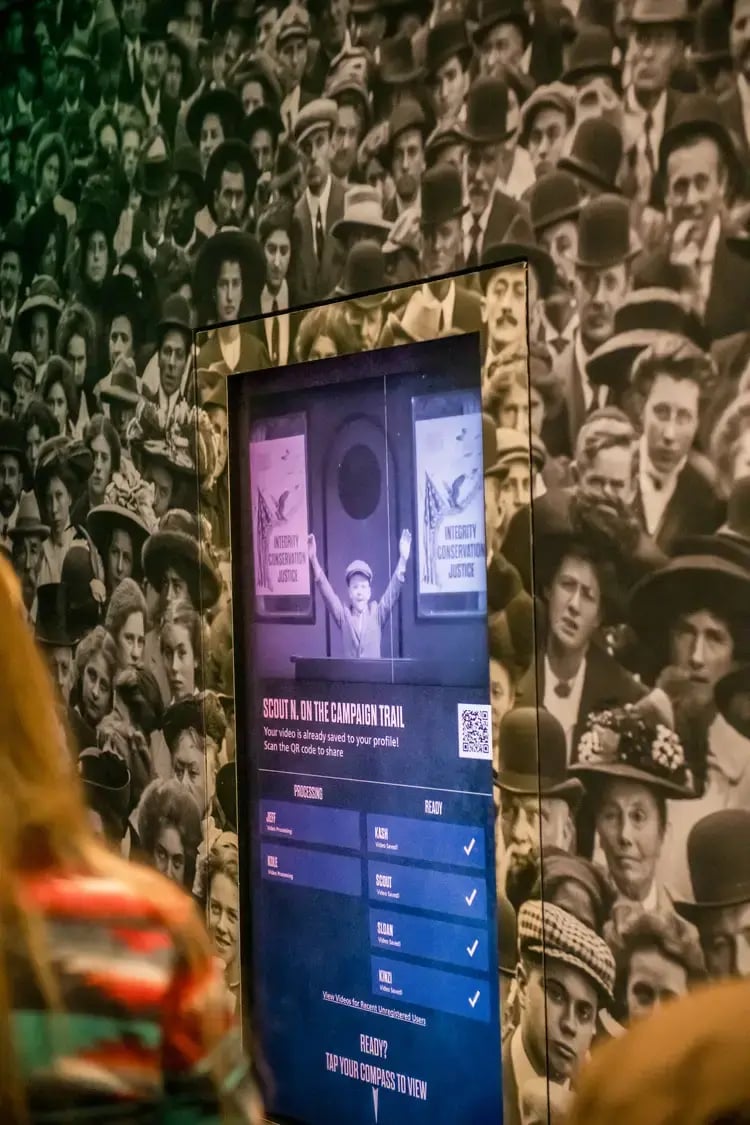
In November 1900, Roosevelt had become vice president to William McKinley. The museum highlights this through two touchscreens that explains his eventual path to presidency. Additionally, visitors can make their own posters using TSI Touch ScapeX interactive stations and have a photo session at a caboose, replicating a famous moment in his campaign. The museum memorializes his election through the creation of a White House Facade that displays projection mapped content of his time at the White House accompanied by speaker narration.


AI Meets History

Face the decisions that defined a presidency

Upon his election in 1904, Roosevelt’s seven-and-a-half-year presidency was one of the most consequential in American history. He became busy with the progress of the country and pursued deals that dealt in the growth of the economy, forestry and foreign policy.

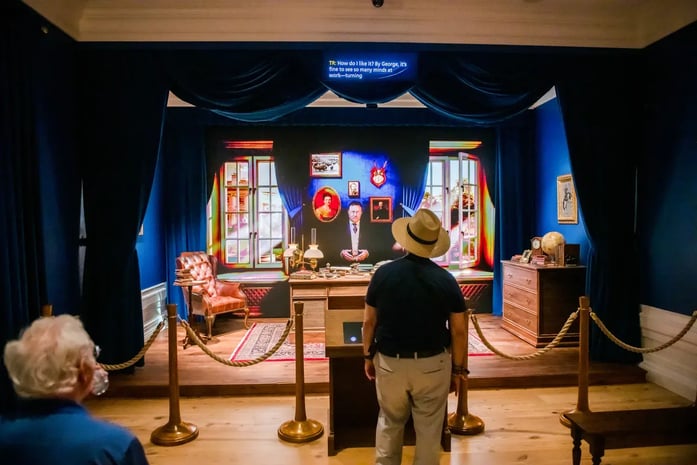
Helping immersive visitors into this information are two 86-inch TSI Touch screens, a DetaiLED wall and speakers that let visitors walk up to Theodore Roosevelt as a constituent and ask questions to engage in an active conversation with the former president. AI delivers Roosevelt’s actual words and contemporaneous primary sources in response to visitor questions.


FROM OVAL OFFICE TO THE FRONTIER  

Interactive Lessons in Leadership

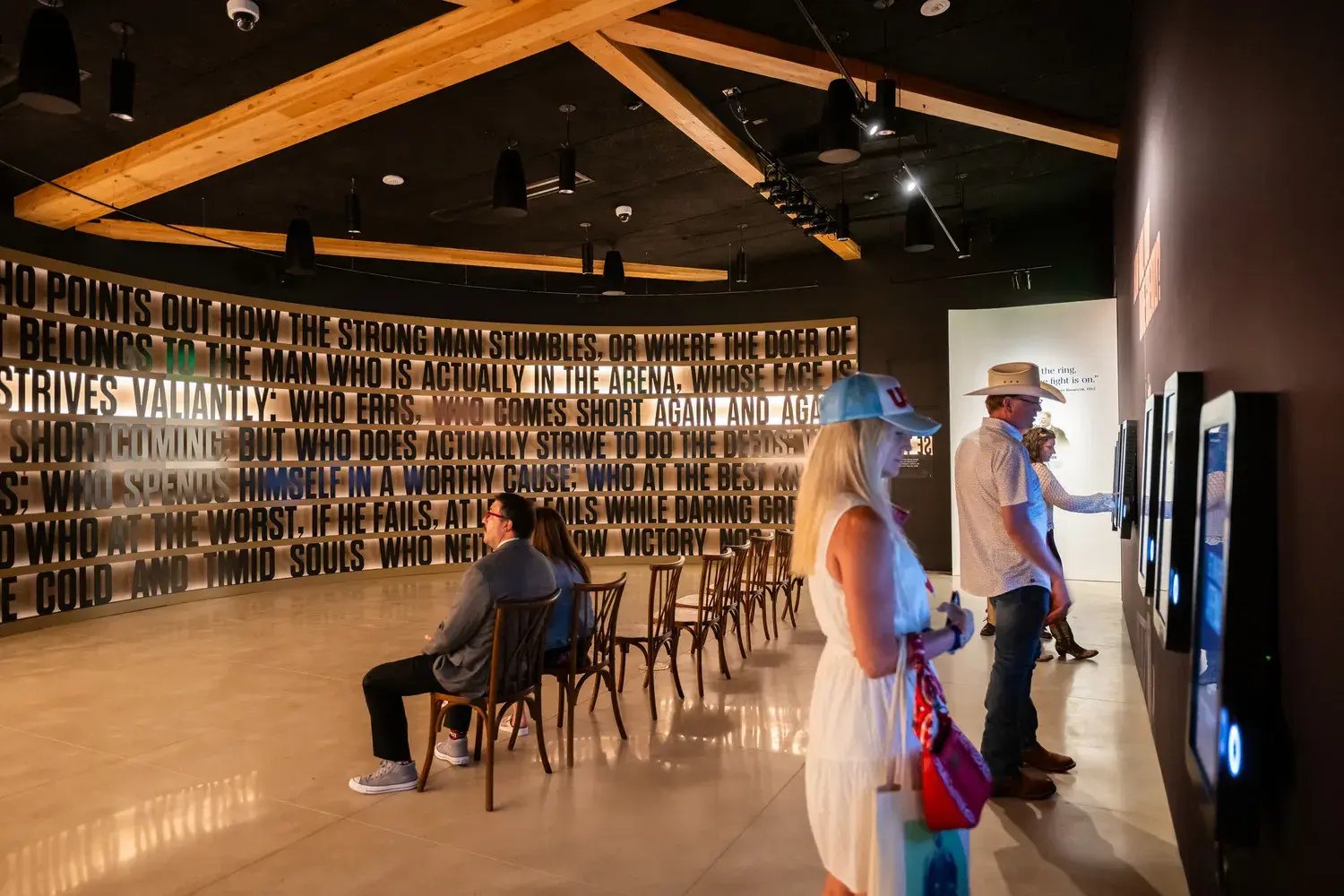
The post-presidency was, by ordinary standards, four lifetimes. Roosevelt led the Smithsonian-Roosevelt African Expedition collecting specimens that filled the Smithsonian for decades. He toured Europe, meeting kings, delivering speeches, and arriving at the funeral of Britain’s King Edward VII. In April 1910, at the Sorbonne in Paris, he delivered the speech popularly known as “Citizenship in a Republic” — the source of the “Man in the Arena” passage that has become his most enduring single contribution to American civic life. Unsatisfied by the current political climate, Roosevelt had also accepted candidacy of the Progressive Bull Moose Party. 

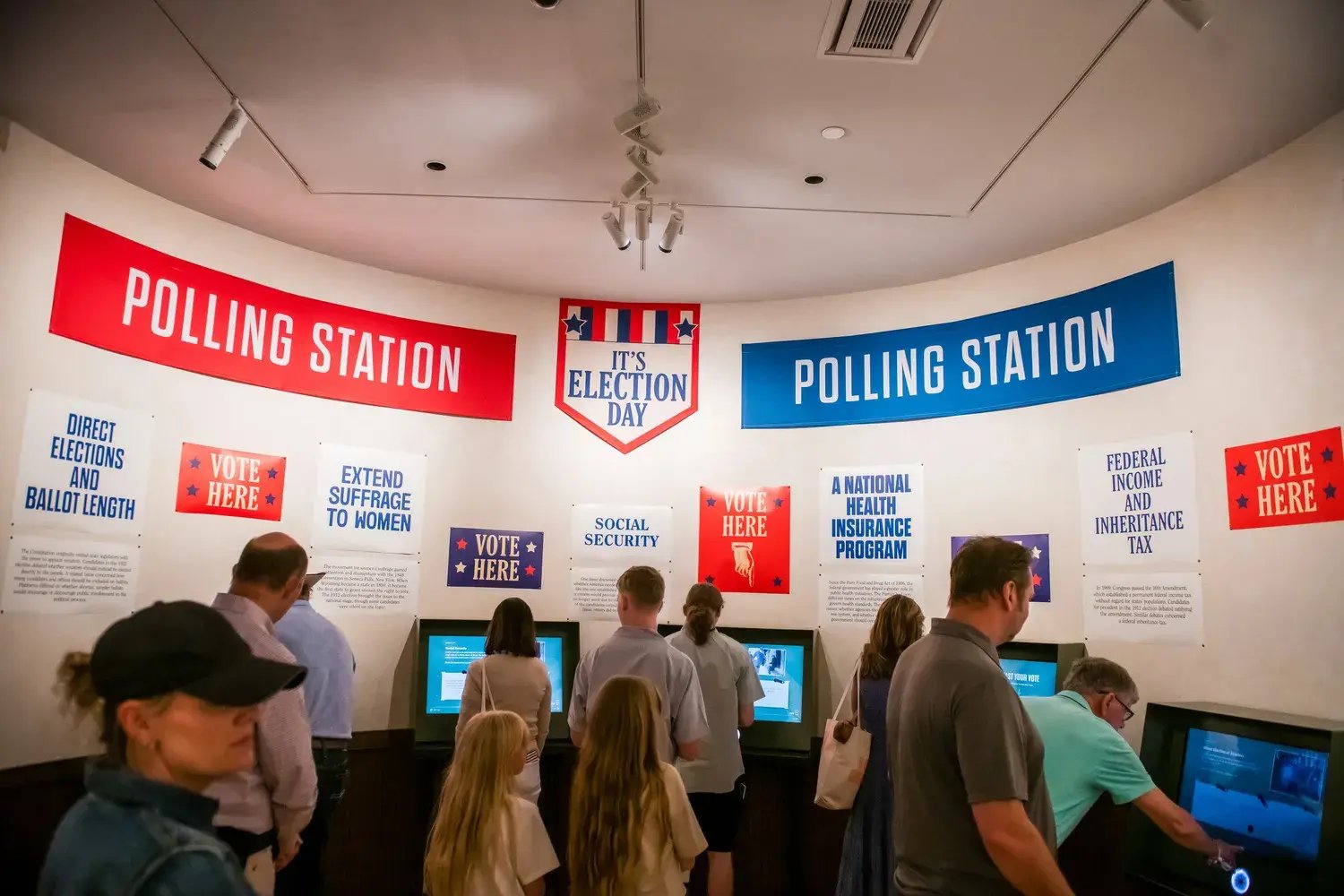
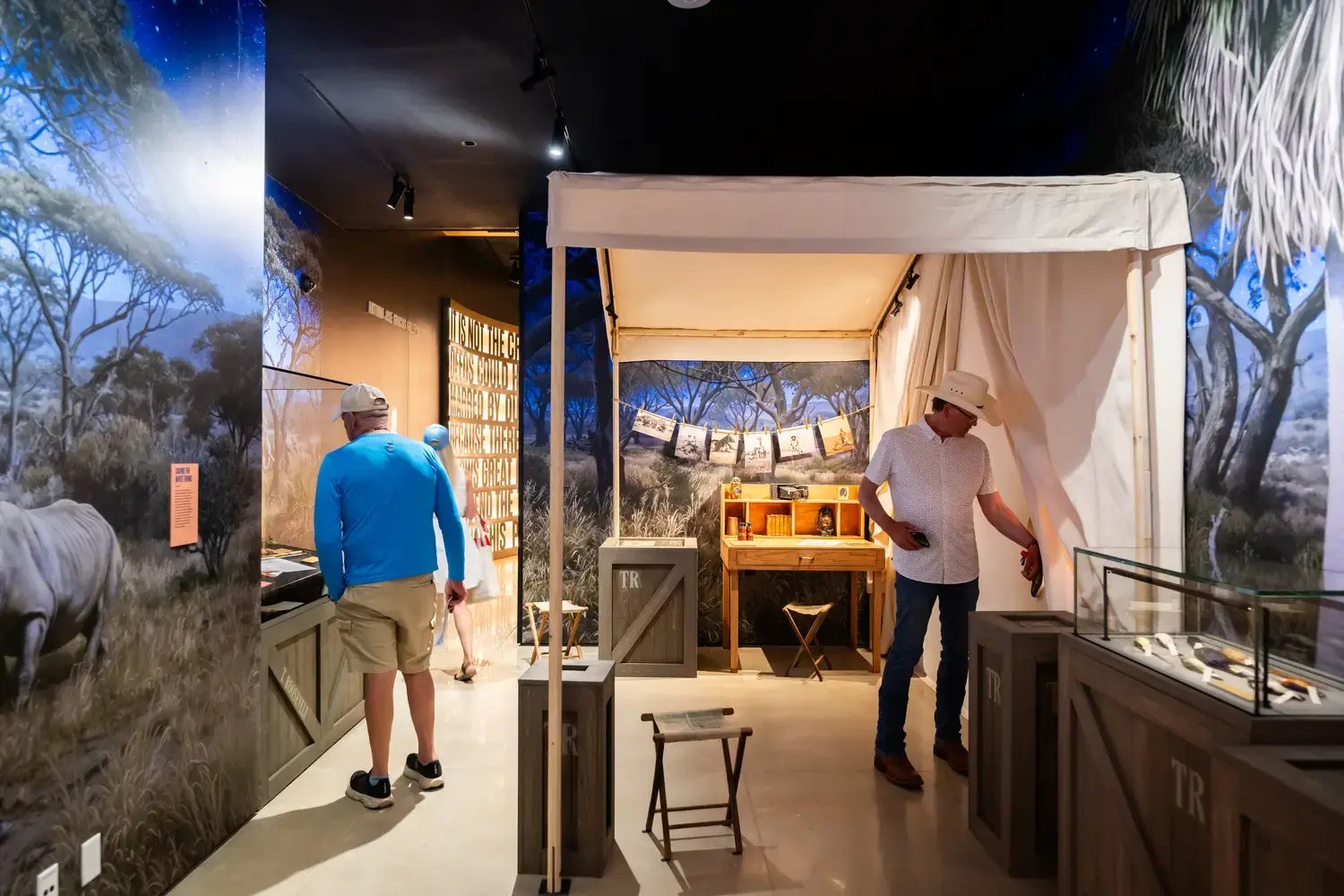
The Library relives this experience through creating an African soundscape that reimagines Roosevelt's time during his expedition. An AV enabled retelling of his speech, choreographed light show and 6 touchscreens create gamification where visitors can determine their contributions based on their selections. Highlighting Roosevelt’s efforts in creating a 3rd party system are 5 interactive touchscreens with a voting interactive that allows guests to select their morals and it will align them with the candidate and party of his time. This experience includes a touchscreen that tells the viewer about the history of the 3rd party system. 

People viewing the 'In the Arena' exhibit while itneracting with the touch screens on the wall
Crowd of people interacting with the polling station exhibit.
Surrounded by Architecture

A Front-Row Seat to Exploration

In 1914, Roosevelt and his son Kermit led the Roosevelt-Rondon Scientific Expedition through the Brazilian Amazon, including the first descent of the unmapped river the Brazilians called the River of Doubt and later renamed the Rio Roosevelt. He nearly died of fever and infection before arriving back to Sagamore Hill permanently weakened.

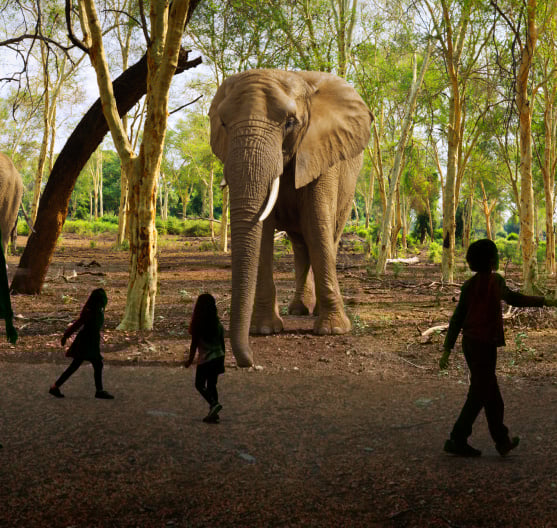
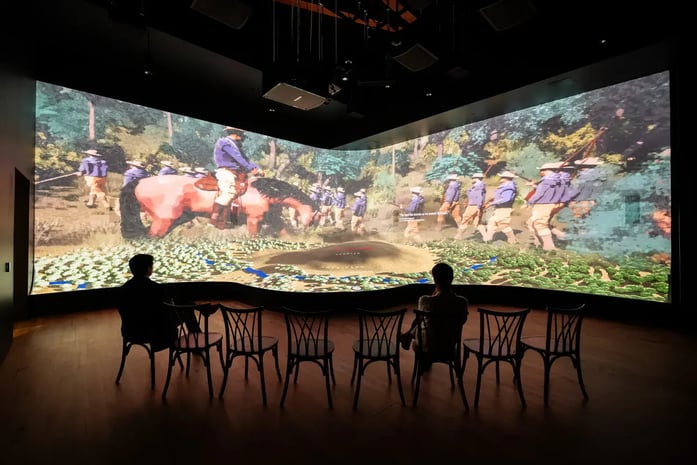
In the museum's Amazon exhibit, 14 Christie projectors, seamlessly mapped using Scalable Display Technologies and Pixera servers, work in concert with an immersive audio system to recreate Theodore Roosevelt's harrowing expedition through the Amazon. The panoramic visuals and sound transport visitors into the heart of the journey, offering a vivid glimpse into the dangerous conditions and extraordinary hardships that the Roosevelts narrowly survived.


SurvivIng Cuba

Projecting the actions that earned Roosevelt honor.

Roosevelt created The First U.S. Volunteer Cavalry through recruiting a remarkable mix of western cowboys, eastern athletes, Ivy League gentlemen, and Native American volunteers from the Indian Territory and from Arizona, Oklahoma, and New Mexico. 

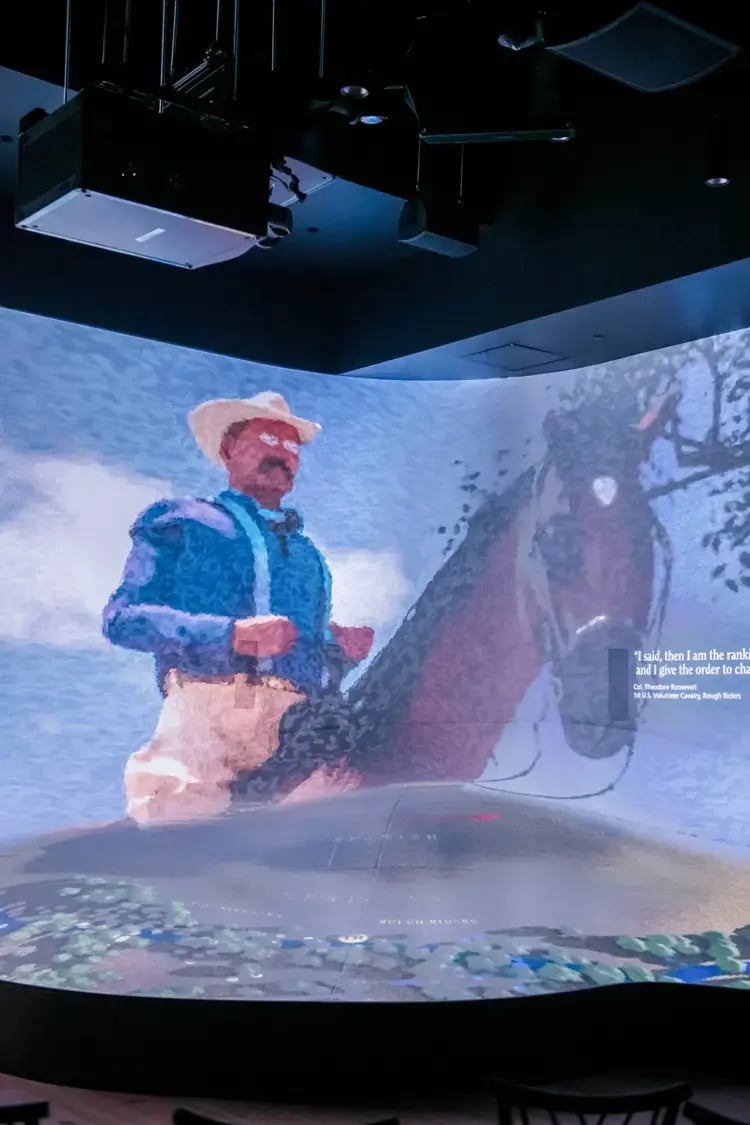
This journey comes to life through three Christie projectors precisely aligned toward the corner of the room, bringing to life the story of how Roosevelt became the only U.S. president to receive the Medal of Honor for his commandment of the regiment during the Spanish-American War.

Group of people viewing curved wall with media.
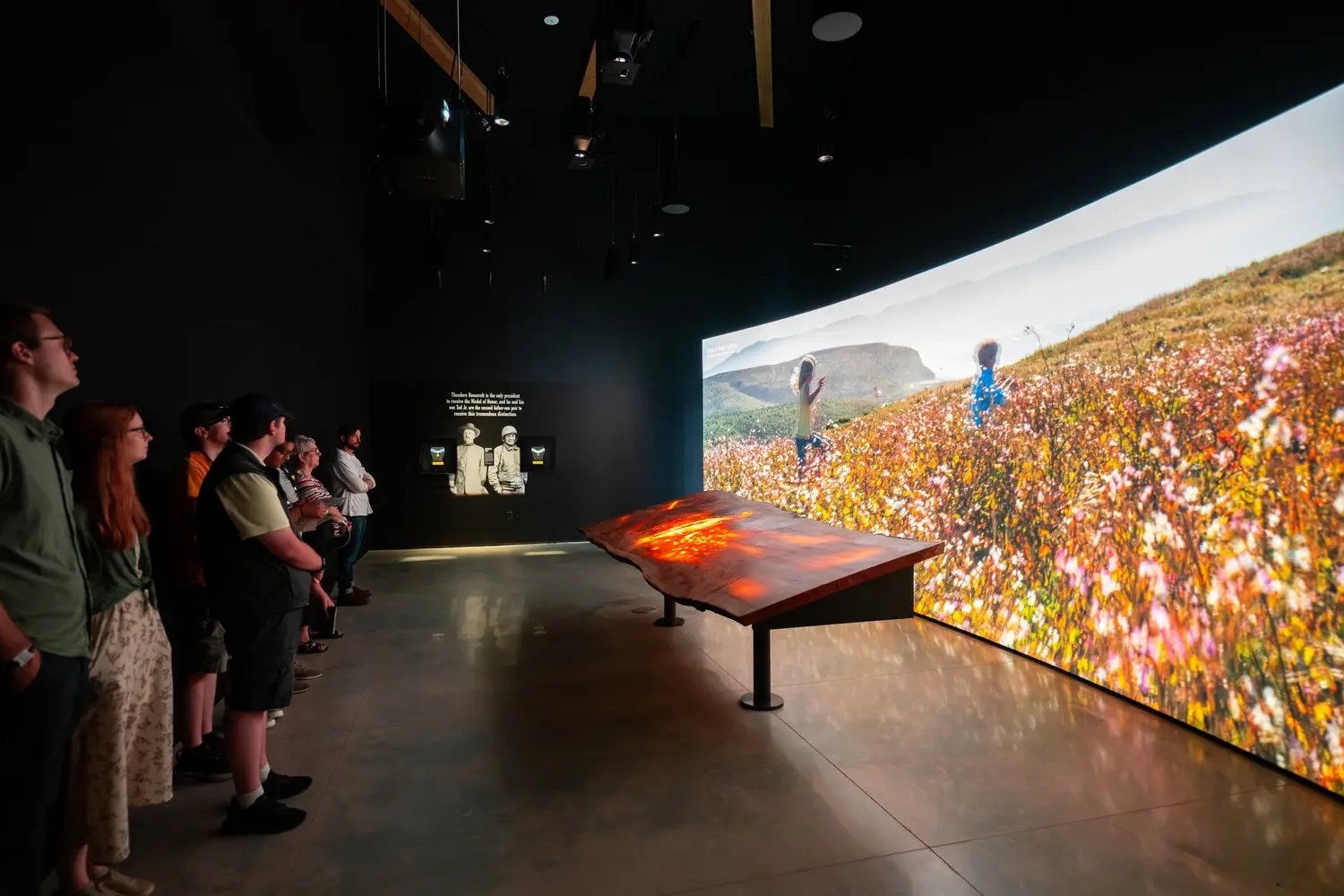
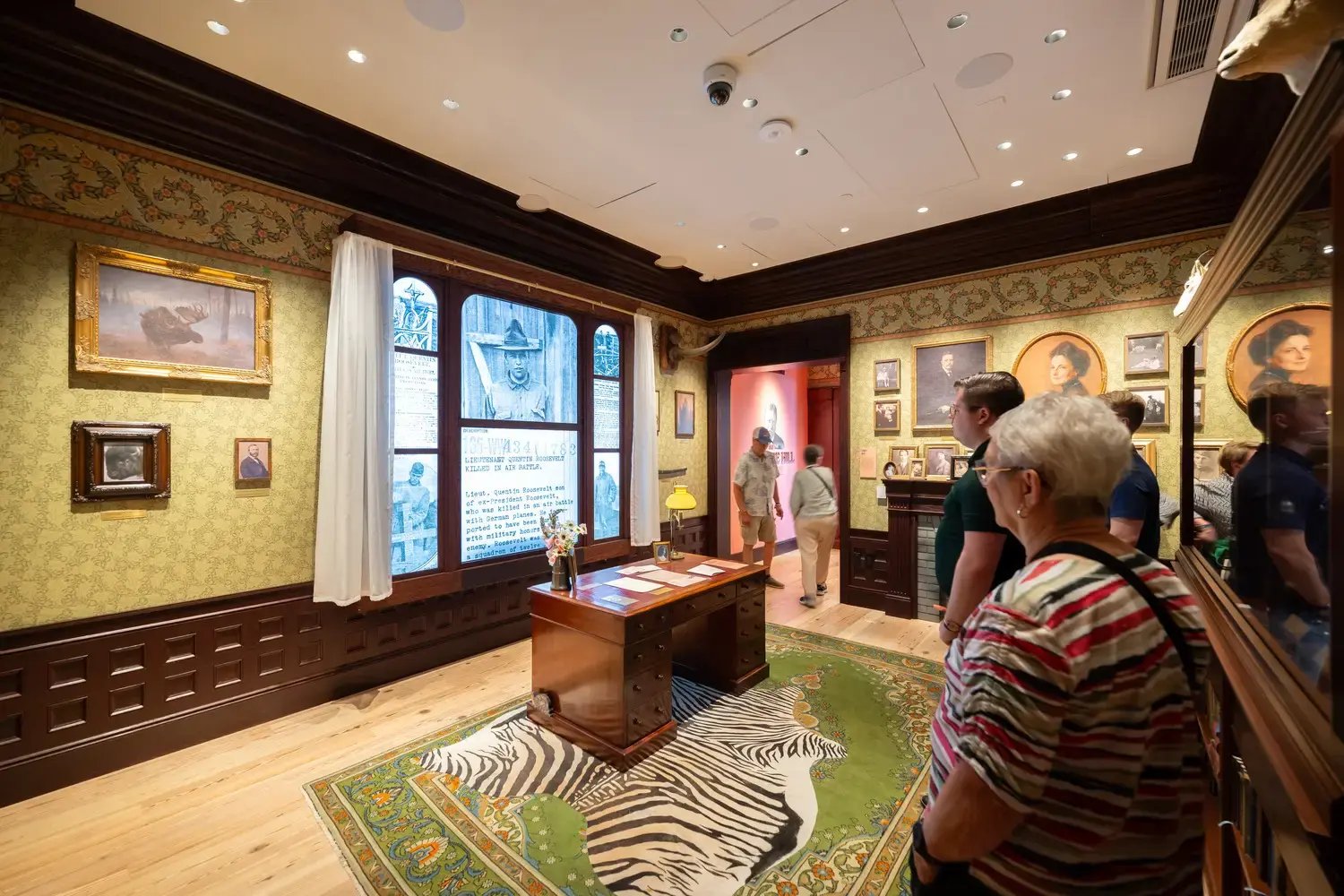
Group of people viewing Roosevelt's home desk display.

LONG LIVE ROOSEVELT

Encouraging Positive Change Through AV Technology.

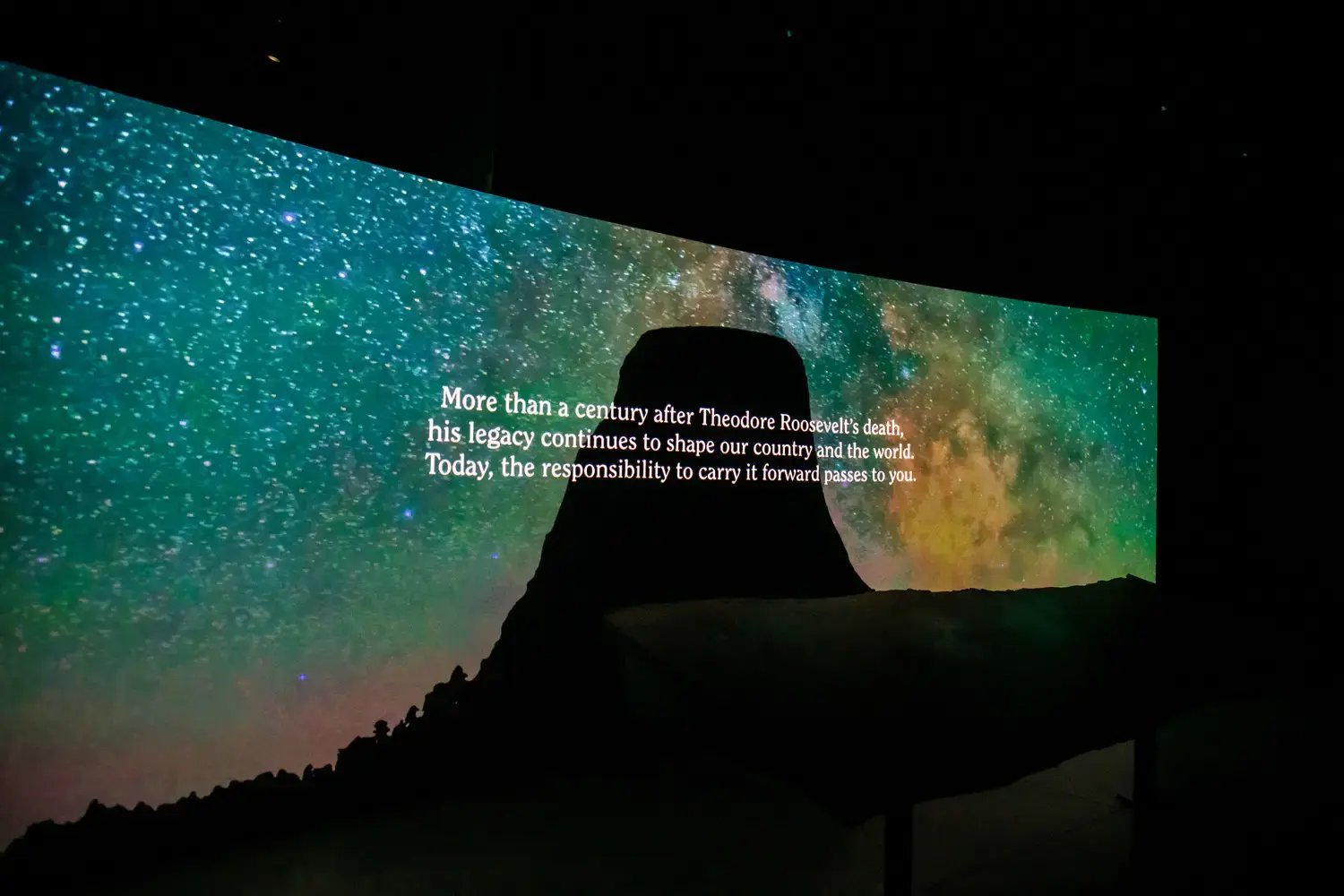
The Last Legacy exhibit reflects the ending of Theodore’s life where he rested in his family’s estate “Sagamore Hill’ in New York. There are three LCD displays with two flanking displays that are stretch models, matching the center 86-inch landscape, mimicking the Long Island-style bay windows. 

Legacy focuses on the life and accomplishments of Theodore Roosevelt. It expands on his conservational efforts and lasting impact on society that continue to live even after his death. A Christie projector displays on a curved screen with two downward projectors on a priceless slab of wood from his presidential estate. 

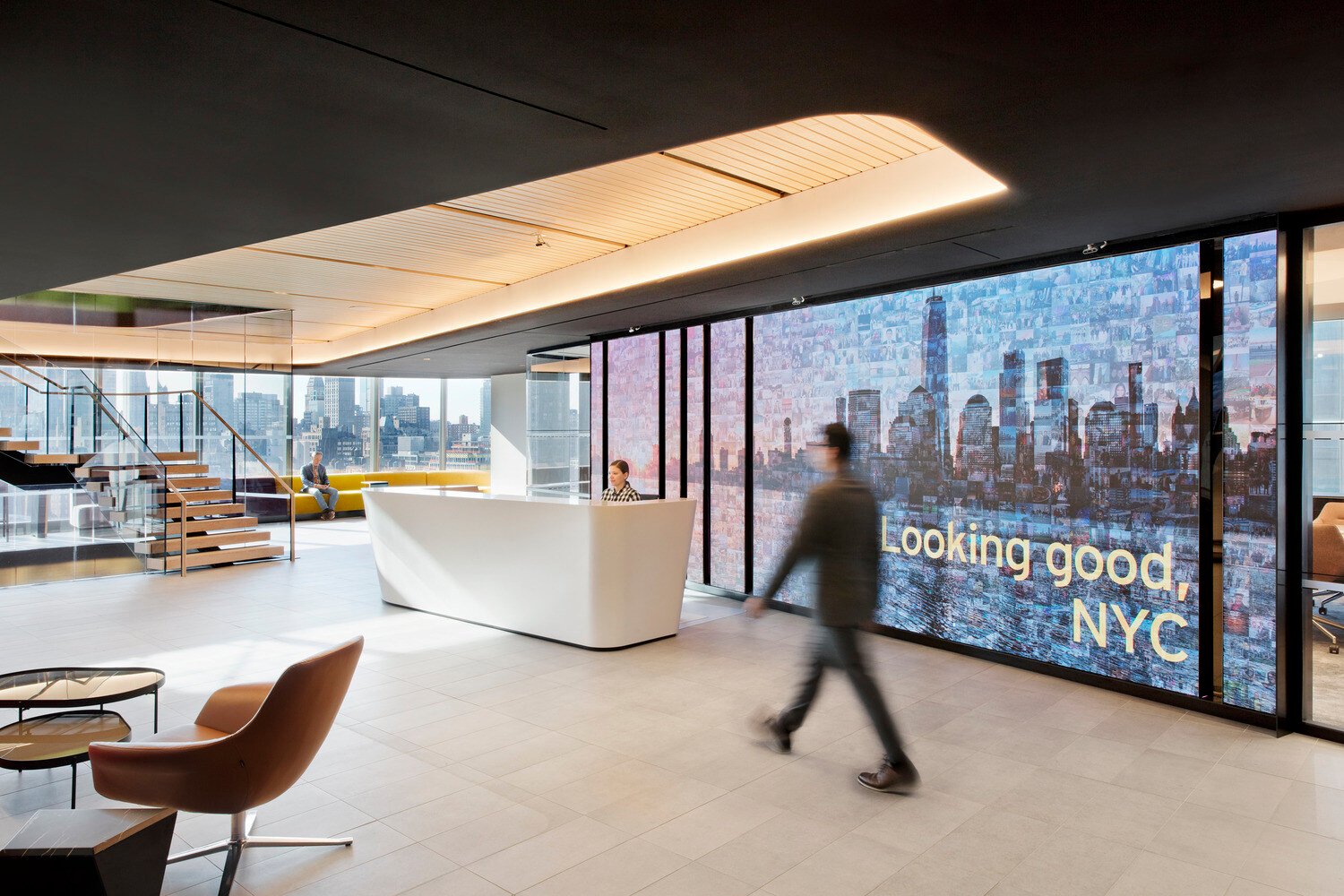
As visitors exit the galleries, they enter the People's Library, a space that invites them to reflect on the values Roosevelt championed throughout his life and consider how those ideals can inspire their own actions. Featuring a 1.5 mm pixel pitch DetaiLED display wall and a custom half-wall with integrated speakers, the experience shifts the focus from Roosevelt's story to the visitor's own. Rather than serving as the end of the journey, the People's Library becomes the beginning of a new one—encouraging every guest to carry forward the spirit of curiosity, courage and civic responsibility that defined Theodore Roosevelt's legacy.

TRPL_N310_medium
TRPL_N318_medium
TRPL_N335_medium
TRPL_N353_medium
TRPL_N396_medium
TRPL_N409_medium
TRPL_N463_medium
TRPL_N331_medium
TRPL_N339_medium
TRPL_N312_medium
TRPL_N340_medium
TRPL_N68_medium
TRPL_N310_medium
TRPL_N430_medium
Experiential Technology for Museum Spaces

Experiential Technology for Museum Spaces. 

From museums to transportation hubs, advanced motion technology is revolutionizing interactive experiences in various spaces and destinations. 

READ MORE

Relevant Projects

National WWI Museum and Memorial The Museum and Memorial’s advanced AV technology allows guests to step directly into the stories of the war, interpreting the history of World War I in a way that encourages thought and empathy for those who lived through the conflict. Learn More
The USGA Experience and World Golf Hall of Fame Electrosonic helps USGA memorialize and recognize golfers throughout history using AV technology to engage and immerse visitors in the experience. Learn More
A Bunch of Stuff Electrosonic helps A Bunch of Stuff display various chapters of Johnny Deeps life through storytelling and providing audiovisual solutions to increase engagement. Learn More
New Jersey Hall of Fame Electrosonic helps New Jersey Hall of Fame commemorate legendary and everyday heroes through implementing audiovisual technology to immerse visitors into the experience. Learn More
Byrnes Health Education Center Interactive audiovisual solutions teach children healthcare in a fun, engaging way. Learn More
Mars: The Next Giant Leap at the Carnegie Science Center Experiential technology takes visitors to new worlds, creating excitement and inspiration about the future for humanity. Learn More
The Museum of Broadway Immersive, interactive experiences set the stage for a celebration of Broadway’s rich heritage. Learn More
The Sailing Museum Cutting-edge interactive technology puts visitors’ sailing skills to the test in a thrilling, fun-packed, hands-on experience. Learn More
CHAOS #501 at the Gagosian Gallery A unique digital art experience showcases 1000 digitized objects with precise rendition. Learn More